
Farmington Hills Resident Lookup Records
To look up a resident in Farmington Hills, match the record to the question. A parcel record can identify an owner of record and a situs address. A deed can show recorded parties and a transfer date. A court file can show that a person was a party, but not necessarily that the person lived in the city. The voter, vital, probate, directory, and library trails each add a different piece. Begin with the source that is keyed to the one fact already known, then preserve the record date and the role shown beside the name.
| Record | What It Confirms | Where | Access |
|---|---|---|---|
| Property and tax roll | Owner of record, parcel situs, and tax mailing clue | Farmington Hills BS&A and Property Gateway | Online property data; clerk, assessor, or FOIA fallback |
| Recorded document | Party roles, recording date, and legal description | Oakland County Super Index | Computer index from 1964; older material through manual and tract channels |
| Voter registration | Registration fields and election geography when releasable | Michigan.gov/Vote or a QVF request | Personalized lookup is not public browse; request fields are redacted by law |
| Court and probate | Party role, case number, case type, and case events | MiCOURT, Court Explorer, and court clerk | Public portions online or by clerk request; protected matters stay closed |
| Vital record | Event, date, place, and relationship lead | Farmington Hills, Oakland County, or MDHHS custodian | Eligibility and channel depend on record type and age |
| Directory or yearbook | Dated household, phone, school, or family-history lead | Farmington Community Library Heritage Collection | Online indexes, scans, and Reference Desk requests; not proof by itself |
For a current owner question, start with the municipal parcel result and then the deed. For an estate question, start with Probate Access and a decedent name. A search for a former classmate is better anchored by school year and class in the library collection. The public trail has no single official Farmington Hills name search that verifies every resident, so a Farmington Hills resident lookup should keep the type of confirmation separate from the lead that prompted it.
Farmington Hills Resident Lookup Property Leads
Farmington Hills BS&A Online searches municipal assessing records by address, owner name, or parcel number. It is useful for anchoring a name to a parcel, not for declaring every person at an address. The county Property Gateway adds the mapped parcel, PIN, aerial context, and report products. Its address or PIN field accepts at least five characters, partial address text, percent wildcards, and multiple comma-separated PINs.
Save the exact parcel identity before changing systems. The county PIN connects the map, the tax identity, and the recorded-document trail. Keep the situs address separate from the mailing address. A tax mailing address can belong to a trust, business, representative, or an off-site owner, so it is correspondence information rather than proof of the person’s residence. The Super Index supplies the next check through party names, address, PIN, document type, and recording range. Its computerized record set begins January 1, 1964. Earlier transfer work moves to manual deed books and the Tract Index.
Note: A recorded owner, a tax-mail recipient, and a current occupant are separate roles that a careful Farmington Hills resident lookup should never merge.
Farmington Hills Court Name Search
The Oakland Court Explorer is the focused county tool for Circuit and Probate case information. Choose Circuit or Probate, then use a business name or a person’s last and first name. A case number uses the displayed pattern YYYY-999999-AA. Advanced controls include party type, case-year range, and two-letter case-type range. Probate document ordering in Court Explorer requires a case number, so the separate Probate name search is the route to that number.
The 47th District Court serves Farmington and Farmington Hills. MiCOURT adds statewide participating trial courts through participant/name and case-number searches, with filters that vary by court. Both systems are discovery tools. Juvenile, sealed, PPO, and probate mental-health material is excluded, and some courts display only convictions sentenced within seven years. A party hit may identify an attorney, creditor, witness, representative, or business rather than a resident.
The 47th District Court records page shows the local access point for Farmington Hills court work.
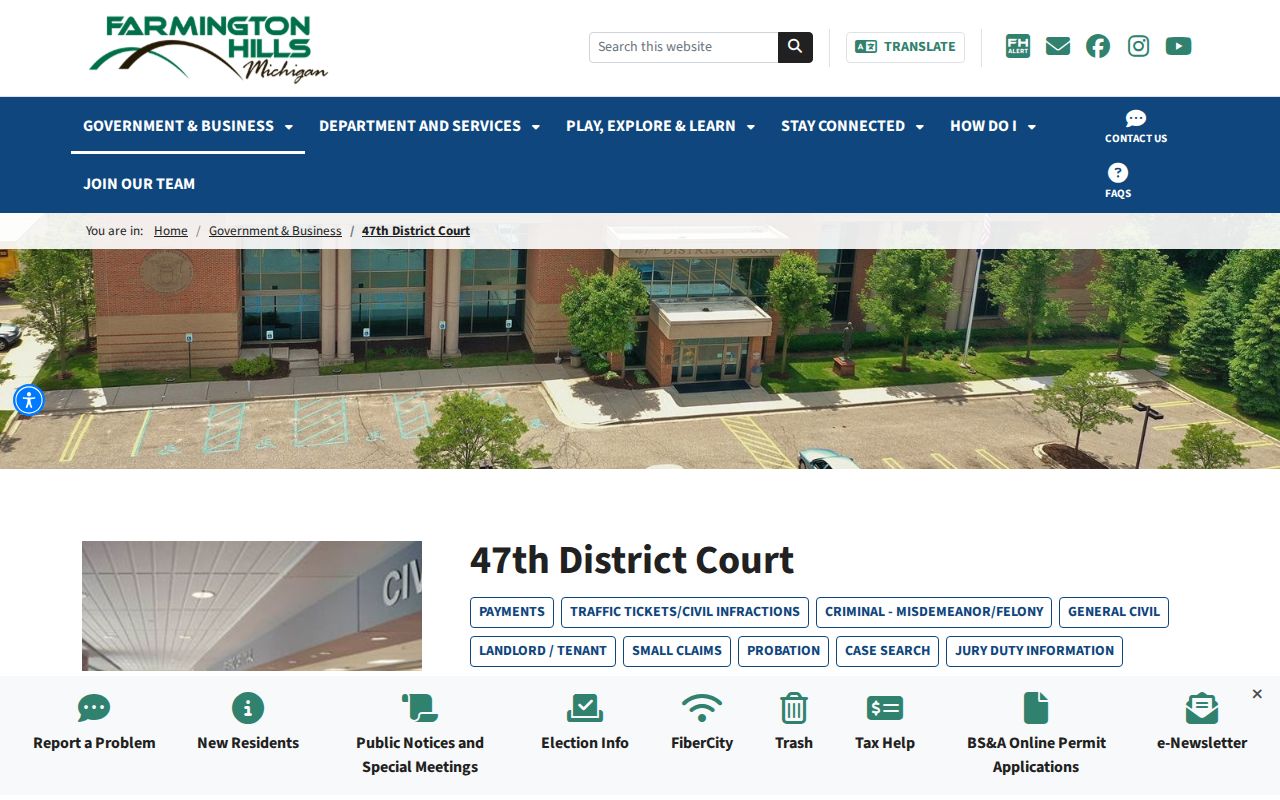
The court page is a starting point for the docket link and clerk path. When a case matters, request the public register, file, or copy from the official court. The local access order allows public register-of-actions access online and other public case information by electronic request; uncertified civil copies are documented at $1 per page, subject to current clerk confirmation.
| Result detail | What to record |
|---|---|
| Party identity | Exact person or business name and party role |
| Case placement | Circuit or Probate, case number, year, and case type |
| Register detail | Event dates, filings, orders, and status entries shown |
| Document route | Whether ordering is available or a clerk file must be requested |
| Restriction | Any public-access exclusion before treating a missing result as proof |
Farmington Hills Resident Lookup Identity Checks
Same-name errors are common. Record spelling, middle initial, suffix, maiden or former name, and likely variations before searching. Then compare two independent identifiers: a name and street or PIN, a name and year of birth, a name and spouse or fiduciary, or a name and legal description. Michigan voter data can include only year of birth in the requestable file, not a full birth date. A name in an index is a lead until the record’s place, date, and role agree with another source.
Keep four statements apart in search notes: appears as a party, appears as an owner, appears at an address, and is confirmed by a custodian. A deed party can be a trustee or estate. A directory line may be only the head of household. For a historic person, a dated directory or obituary paired with a deed, probate record, or vital record is stronger than a single modern search result. When records conflict, retain both sources and their dates instead of silently choosing the newer display.
Verify a Farmington Hills Resident
Use one verification task at a time. The sequence below tests whether a named person connects to a particular Farmington Hills address without turning a mailing clue or a court hit into a broader claim.
- Write the full name, each known variant, the address or time period, and the question being tested.
- Check BS&A or Property Gateway for the parcel, its PIN, the owner of record, and the displayed situs and mailing fields.
- Search Super Index for the owner, grantor, grantee, PIN, or legal description, then record the document number and recording date.
- Use Court Explorer, MiCOURT, or Probate Access only to test the matching name, court, party role, and date. Ask the clerk for the public file when the official document is needed.
- Corroborate a death, marriage, estate, or historic household question through the appropriate vital custodian, obituary, or library record.
- Docket
- A court’s running list of case events, filings, and orders. It is not the same as every document in the file.
- Index and image
- An index points to a record. The image or copied file is the underlying document and may require an order or counter request.
- Certified copy
- A copy issued by the custodian with its official certification for the record type requested.
When a search shifts from one address to who else owns along a road, use the Farmington Hills street directory for the parcel-first, street-level workflow rather than extending a one-person result beyond its support.
Farmington Hills Vital Record Limits
Vital records are not one open collection. Under MCL 333.2882, a birth certificate less than 100 years old is limited to the subject, a named parent, an heir, legal representative, guardian, court, or eligible attorney or power of attorney. Birth records at least 100 years old are public. Death, marriage, and divorce records are broadly requestable, subject to stated exceptions. The law also distinguishes a divorce certificate from the court file that holds pleadings and orders.
MDHHS Vital Records accepts state orders by its documented online, mail, phone, Lansing drop-box, appointment, and will-call channels. Farmington Hills City Clerk processes certified birth and death copies for city-held events, while Oakland County is the practical county counter. For genealogy, MCL 333.2885 permits the state registrar to transmit death, marriage, and divorce records at 75 years and birth records at 110 years to the Library of Michigan.
Note: Verify the event type, custodian, eligibility, current form, and copy type before paying for a vital-record request.
Farmington Hills Resident Lookup History
For a former classmate, family member, or earlier Farmington Township identity, the Farmington Community Library Heritage Collection is the named local fallback. It holds local directories, newspapers, surname material, funeral-home records, and yearbooks. Farmington Township high-school yearbooks run from 1923 to the present in scattered holdings, and area college or university yearbooks run from 1892 to 1953 in scattered holdings. Request the school year and class from the Reference Desk, then use that detail as an identity check.
The same library’s Heeney-Sundquist Funeral Home files contain 15 volumes of photocopied death certificates from 1950 through 1992 with an every-name index. Its Robert B. Cook Collection covers late-nineteenth-century through 1970s biographies, marriage notices, obituaries, family histories, and German church records. These are period sources with indexing and coverage limits. A missing line does not prove that a person was absent. Historical results should be matched to a date, an address, and an official record where possible.
Farmington Hills Registry Search Limits
Michigan’s public safety registries are narrow tools, not a Farmington Hills resident lookup or a general name directory. Michigan OTIS concerns people in state correctional supervision and has its own exclusions. It cannot establish that a person who does not appear is a current resident, and it cannot substitute for a court file or a custody record held by another agency.
The Michigan OTIS search is limited to its correctional-supervision scope.
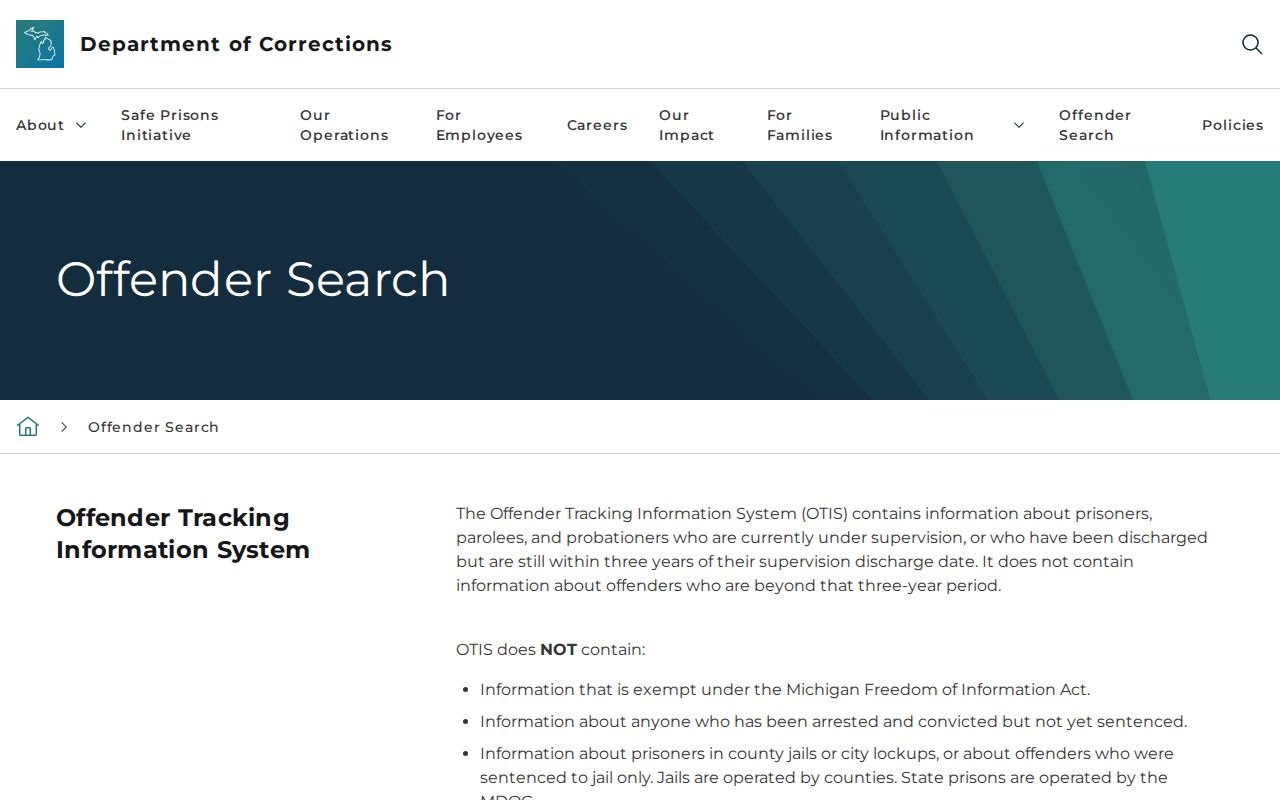
Use an OTIS result only for the information and status its custodian displays. If a public criminal record matters, verify the court, case number, and official file instead of drawing conclusions from an absence or a name similarity.
The Michigan Public Sex Offender Registry supports name, address or radius, city, county, and ZIP searches. Its ZIP capability is specific to that statutory registry and does not produce a general resident list. Registry details must be read within the limits and notices supplied by the Michigan State Police.
The Michigan Public Sex Offender Registry page shows the registry-specific search channel.
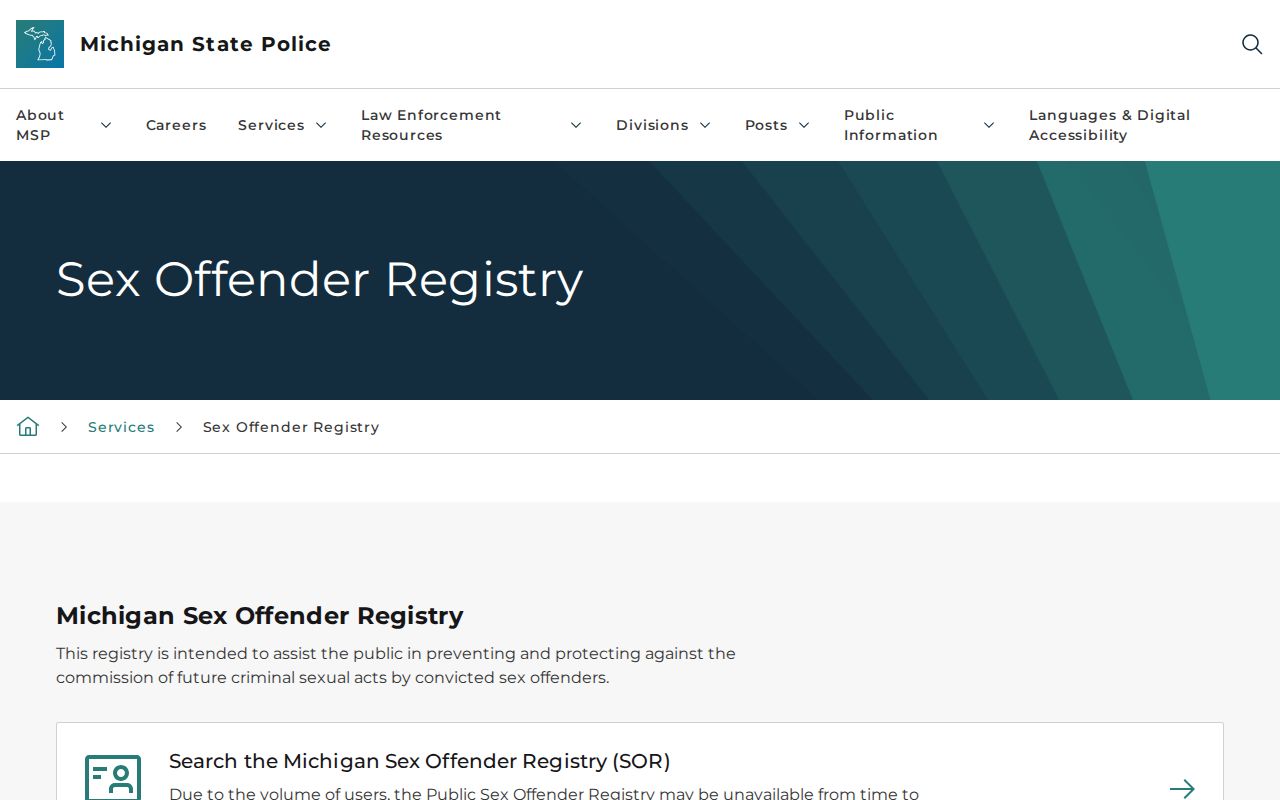
That scope matters: neither registry establishes every person living in Farmington Hills, every household member, or a person’s current connection to a parcel.
Limits on Farmington Hills Resident Lookup
Michigan FOIA opens existing public records, not every personal field or a demand that a custodian build a new resident list. Michigan.gov/Vote is a personalized voter-information tool, while a public Qualified Voter File request goes through the appropriate clerk or Bureau of Elections. Under MCL 168.509gg, the file excludes driver or state-ID number, month and day of birth, telephone, email, digitized signature, the last four Social Security digits, the receiving office, and declined-registration records. A registration address is evidence of registration, not a universal proof of residence.
The Michigan Address Confidentiality Program gives qualifying people a designated address and mail forwarding. That information is not subject to FOIA except for authorized disclosures. Do not attempt to work around a substitute address. For a wrong property, court, voter, or recorded-document entry, ask the named custodian for its correction, redaction, or protective-order process and identify the exact record number or parcel.
Lawful personal research. Use Farmington Hills records for a lawful personal purpose. Michigan law does not permit public records to be used to stalk, harass, intimidate, or harm another person.