
Finding Farmington Hills Resident Leads
Farmington Hills resident research works best when the question determines the first record. An exact address points to the municipal assessor and the county parcel map. A name tied to a purchase or refinance belongs in the Register of Deeds index. A person from an earlier era may appear first in a Farmington telephone book, obituary index, yearbook, or census. Court and vital material can confirm a relationship or event, but each system has its own access rule. A current owner is not automatically every person at an address, and a directory entry is a dated listing rather than a lasting identity claim.
Use the record date as carefully as the name. Farmington Hills grew from the former Farmington Township, Wood Creek Farms, and Quakertown areas, so older material can use a different place label. Keep the exact spelling, street form, parcel number, and source date in a note. Those details make it possible to test a later match instead of merging similar people. If a needed city record is not online, the City Clerk and Michigan Freedom of Information Act request channels are the documented fallback.
- Search the Farmington Hills assessment record by address, name, or parcel number and save the parcel identity.
- Check Oakland County Property Gateway to compare the mapped parcel, address, and county PIN.
- Use the Oakland Super Index for a deed or other recorded document connected to the name, address, or PIN.
- For a past household, consult Farmington Community Library directory, newspaper, obituary, or yearbook holdings.
- Ask the identified custodian for an existing record when the online index does not provide the needed detail.
Note: A useful Farmington Hills residents directory result identifies a record and date, not a promise that every household member is publicly listed.
Farmington Hills Records Offices
Three offices form the practical front desk for a Farmington Hills residents directory search. The municipal assessment system links an address, owner name, and parcel reference. Oakland County records recorded land documents and maintains the Super Index. The City Clerk maintains the city voter-registration file, issues city-held birth and death copies, and receives city FOIA requests. The county and city records answer different questions, so a sound search moves from an address or name to the custodian that created the record.
Oakland County Clerk/Register of Deeds
1200 N. Telegraph, Dept. 480
Pontiac, MI
248-858-0597
Farmington Hills Assessing Records
Farmington Hills municipal portal
Farmington Hills, MI
248-871-2470
Farmington Hills City Clerk
31555 W. Eleven Mile Road
Farmington Hills, MI 48336
248-871-2414
Farmington Hills Parcel Search Keys
The Farmington Hills BS&A Online portal separates assessing, building, tax, utility billing, and detailed-record services. Its public search choices include Address, Name, Parcel Number, Utility Billing Account Number, and Building Department Record Number. An address search is the best start when the goal is the parcel. A name search can be a useful property or tax lead, but the source role still matters. The address shown for tax correspondence can differ from the physical situs, which is the parcel location.
| Portal field | Use in a resident search | Important limit |
|---|---|---|
| Address | Find a municipal parcel record | Check the exact street form |
| Name | Locate a property, tax, or building lead | It does not establish household membership |
| Parcel Number | Match a city record to the county PIN | Keep the source formatting |
| Building Record Number | Reach a permit or building record | Applicant is not necessarily an occupant |
The Oakland County Property Gateway adds the map connection. Its search field accepts a PIN or property address with at least five characters. Research notes document partial addresses, percent wildcards, and comma-separated PINs. That makes it useful for testing a difficult address, then confirming the selected parcel on the map.
Farmington Hills BS&A Online is shown in the municipal search capture below.
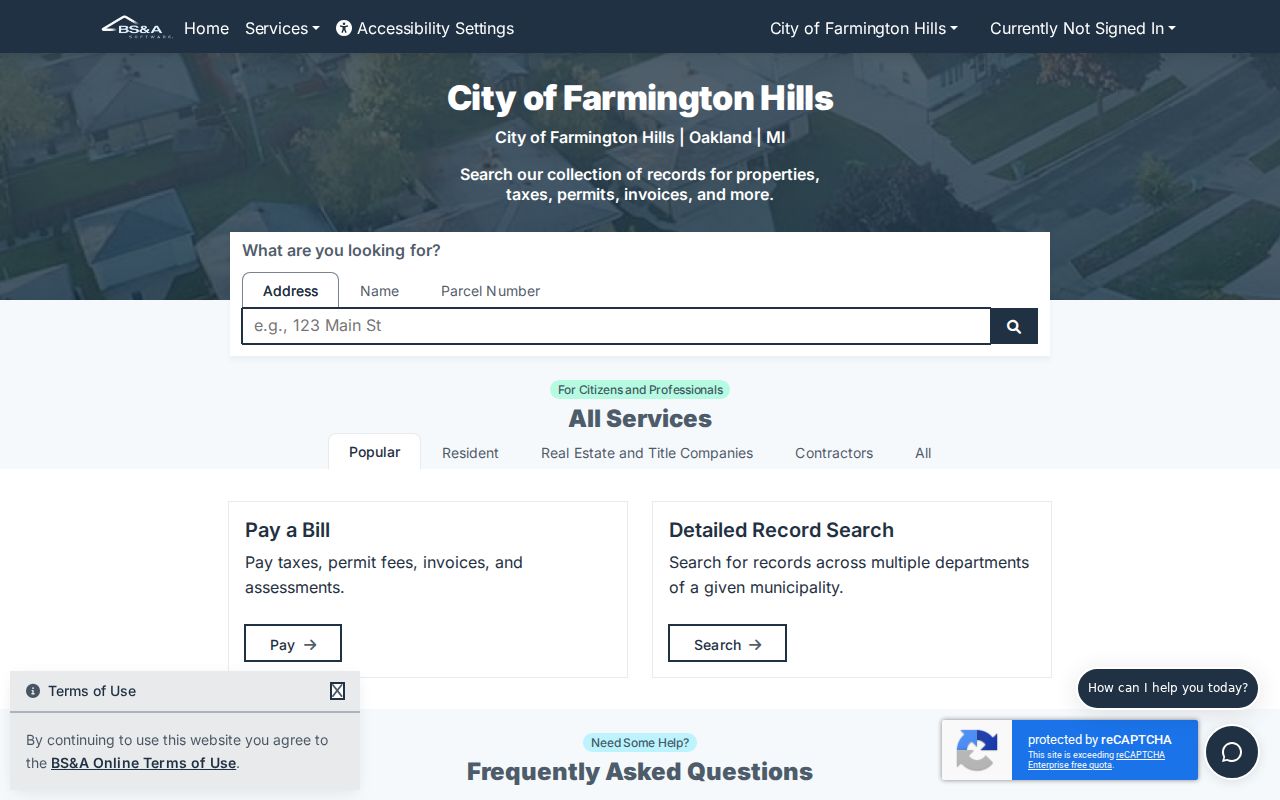
The portal is a starting point for an address-led Farmington Hills residents directory search, not a complete public household roll.
Farmington Hills Map and PIN Trail
Property Gateway provides parcel boundaries, current and historic aerials, elevation contours, FEMA flood layers, and map or report products. Use the map to separate a corner parcel, condominium unit, common area, or neighboring lot before treating a nearby record as the same property. A county PIN, also called a Sidwell or parcel identifier, is the bridge between the municipal search, county map, tax material, and deed trail. The county tax search uses the ten-digit PIN without dashes or spaces.
- Parcel
- A defined piece of land used for tax and mapping records.
- Situs address
- The physical address of the parcel or building.
- Mailing address
- The place tax correspondence is sent, which may be elsewhere.
- PIN
- The county parcel identifier used to keep a land record tied to the correct property.
Basic map browsing and paid reports are different access levels. A map impression can orient a search, but a dated document or report is needed when an exact field matters. The Property Gateway image below shows the county tool associated with this Farmington Hills residents directory route.
Oakland County Property Gateway supplies the mapped parcel view.
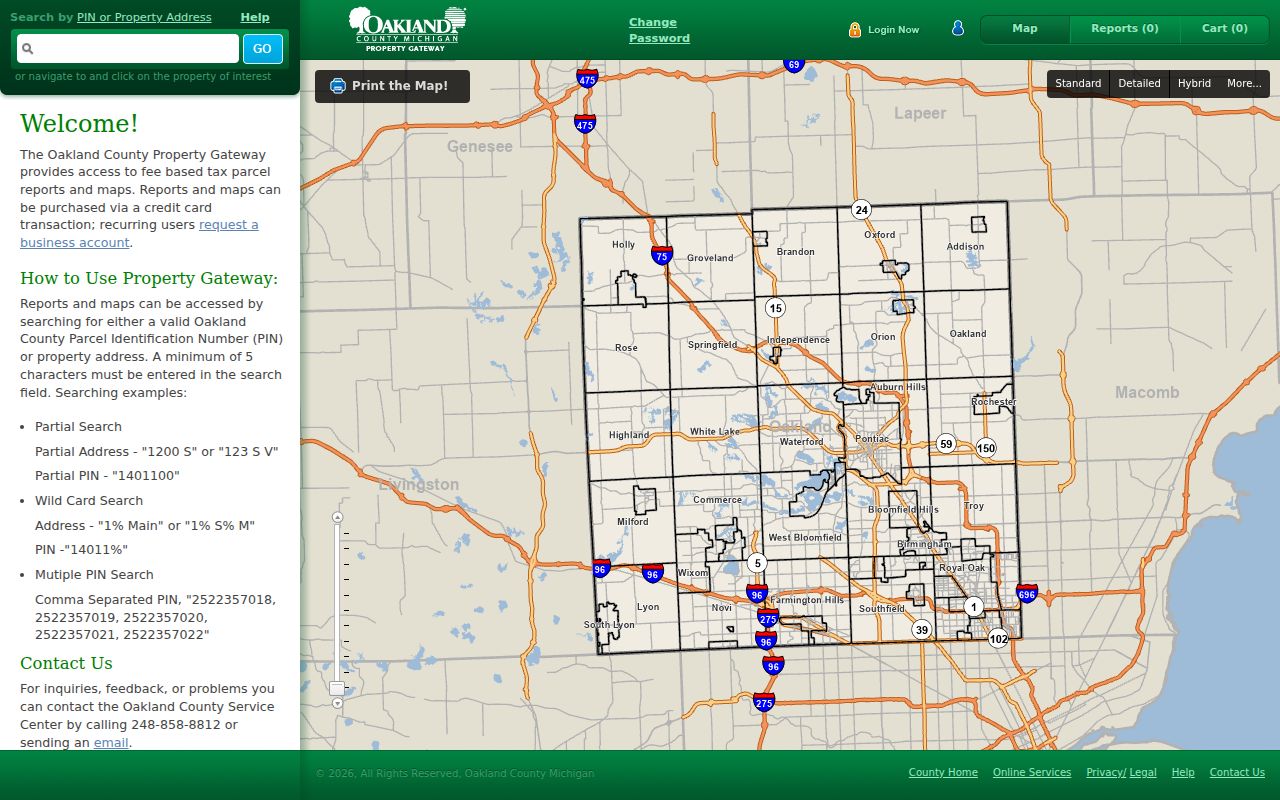
Follow the map result with the exact PIN and source date, especially when an older record uses a Farmington Township label.
Farmington Hills Deed Index History
For a name in a land transfer, the Oakland County Super Index is the county discovery layer. Computerized property records run from January 1, 1964 to the present. Earlier material is not absent, but it moves to manual deed books, the Grantor/Grantee Unit, and the Tract Index. The index can search a simple term such as a name, full address, or PIN, and its advanced fields include Grantor, Grantee, recorded or file date, instrument number, document type, subdivision, block, and lot.
A grantor is a party giving or transferring an interest. A grantee is a party receiving one. Neither label alone proves a person lived at the property. Save the document number, recording date, party role, and legal description, then compare the image if a conclusion depends on the document. Indexing can develop after recording, and copies are purchased individually or through a subscription.
The Oakland County Super Index capture illustrates the recorded-document search route.
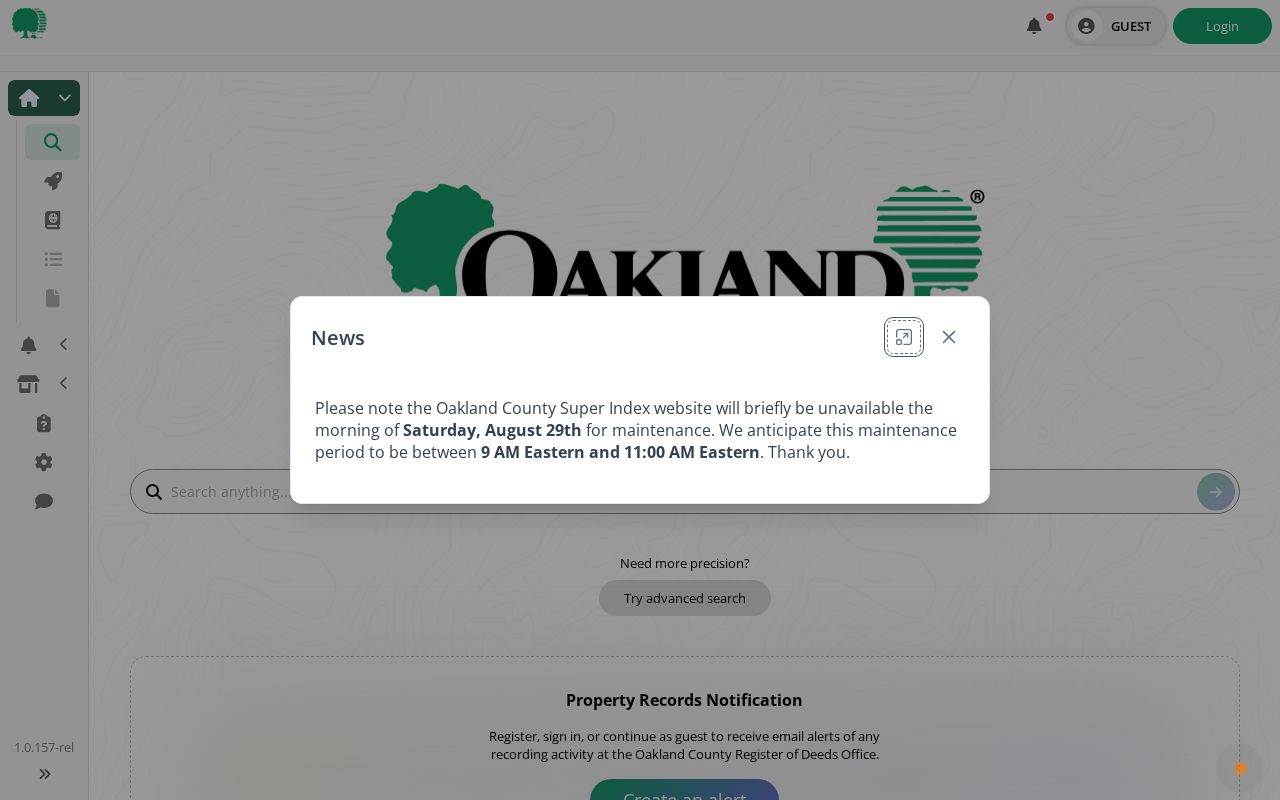
The 1964 computer line is a useful number to retain in a Farmington Hills residents directory notebook because older transfers need a different access channel.
Farmington Hills Current Record Sources
Current Farmington Hills resident evidence is divided by record purpose. Parcel and tax records name an owner of record. Recorded land documents identify parties in a transaction. The voter file has a separate request path, and a person’s own voter-information lookup is not a public citywide browser. Court portals list eligible case parties, not a municipal address roll. The table keeps those sources distinct so a searcher can choose a relevant trail without overstating what it proves.
| Source | People or facts shown | Keeper | Access route |
|---|---|---|---|
| Assessing and parcel record | Owner of record, situs, parcel, tax context | Farmington Hills and Oakland County | BS&A and Property Gateway |
| Recorded document index | Grantors, grantees, document details | Oakland Register of Deeds | Super Index, counter, or mail |
| Qualified Voter File | Authorized public registration fields | Michigan Department of State | FOIA request by listed geography |
| Eligible court index | Party, case number, and register information | 47th District and Oakland courts | Portal plus clerk file |
| City staff information | Public city staff contacts | Farmington Hills City Clerk | Department page |
When the goal is to test one person across several records, use the focused Farmington Hills resident lookup workflow. It keeps an owner, a party to a filing, and a dated directory entry from being treated as the same kind of fact.
Farmington Hills Voter File Access
Michigan Voter Information Center helps a voter check their own status, polling place, clerk, sample ballot, and absentee information. It is not a public browse of all Farmington Hills names. A public registration-file request uses the state Qualified Voter File form and selects an available geography such as a jurisdiction, precinct, county, or district. The form does not document a custom household or ZIP search. Farmington Hills City Clerk maintains the city registration file and is the local correction and precinct contact.
The requestable file can include a complete name, residential or mailing address when available, year of birth, registration date, status, voter ID, jurisdiction codes, and requested history. MCL 168.509gg protects driver or state ID numbers, month and day of birth, phone, email, signature, last four Social Security digits, and other listed fields. Registration is evidence with a date and status, not a universal count of who lives at an address.
Michigan Voter Information Center is the official personalized lookup pictured here.
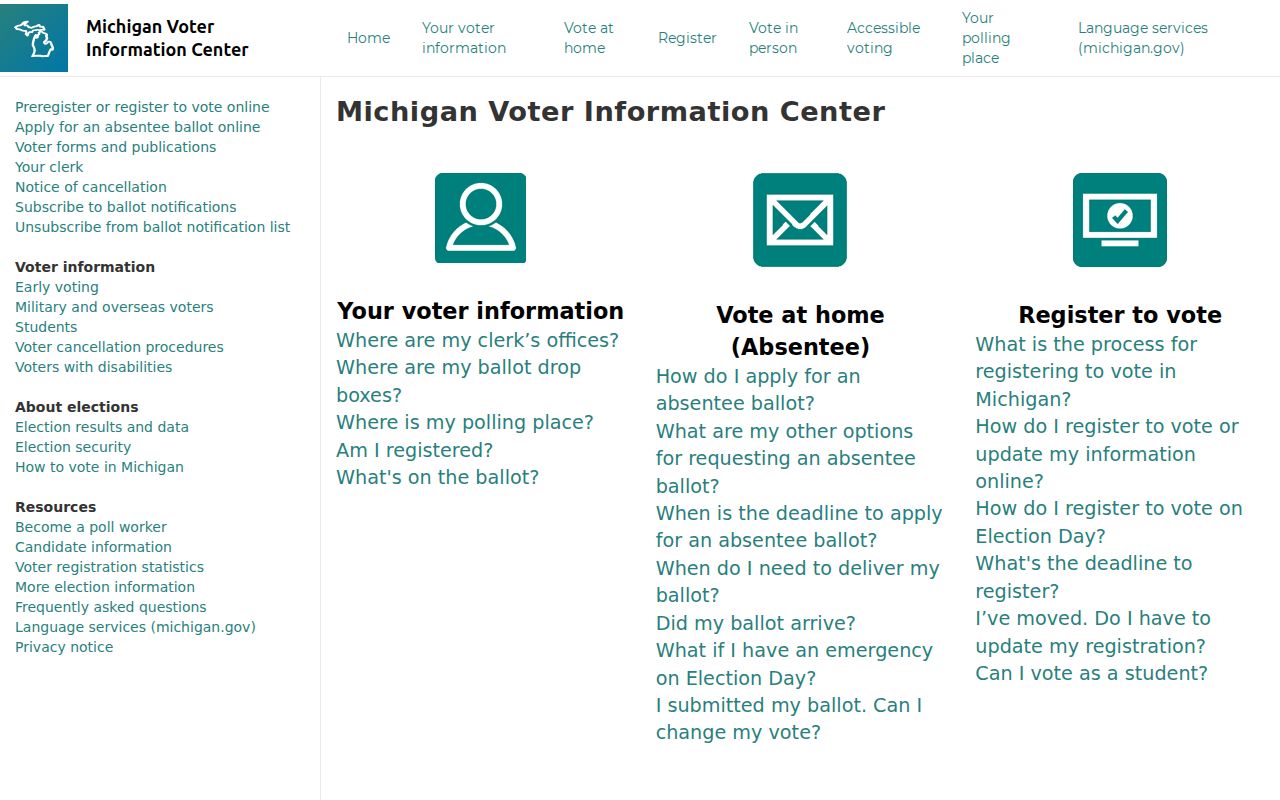
The individual-oriented screen reinforces why a lawful file request and a self-service voter check are separate Farmington Hills residents directory paths.
Farmington Hills Court Name Records
The 47th District Court serves Farmington and Farmington Hills for matters including traffic, civil, small claims, and preliminary felony jurisdiction. Statewide MiCOURT searches participating cases by participant or case number. Oakland Court Explorer covers Circuit and Probate case information with court type, business or person name, case number, party type, case-year, and case-type search controls. A court hit calls for a role check: a party could be a creditor, attorney, witness, fiduciary, or business representative rather than a Farmington Hills resident.
Court systems also exclude or restrict several record groups. Juvenile, PPO, probate mental-health, sealed, and protected material is not a gap to work around. The official file, clerk, or court counter remains the right confirmation channel for a result that matters. Court Explorer shows registers of action and eligible document-ordering paths; Probate document ordering requires a case number, even when a name search helped find it.
Oakland Court Explorer is represented in this Farmington Hills court-search capture.
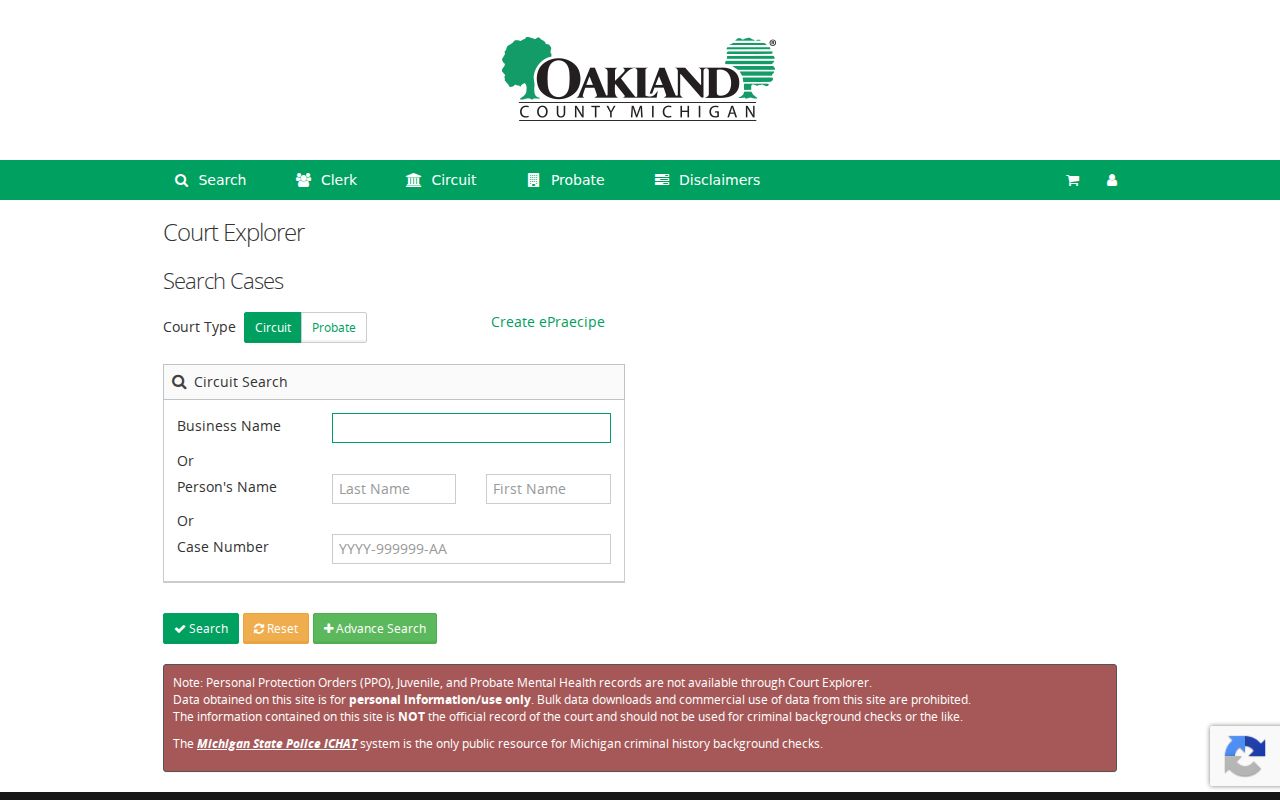
A court index can generate a case lead, while the court clerk is the source for an official file or copy request.
Michigan MiCOURT Case Search provides the separate statewide interface.
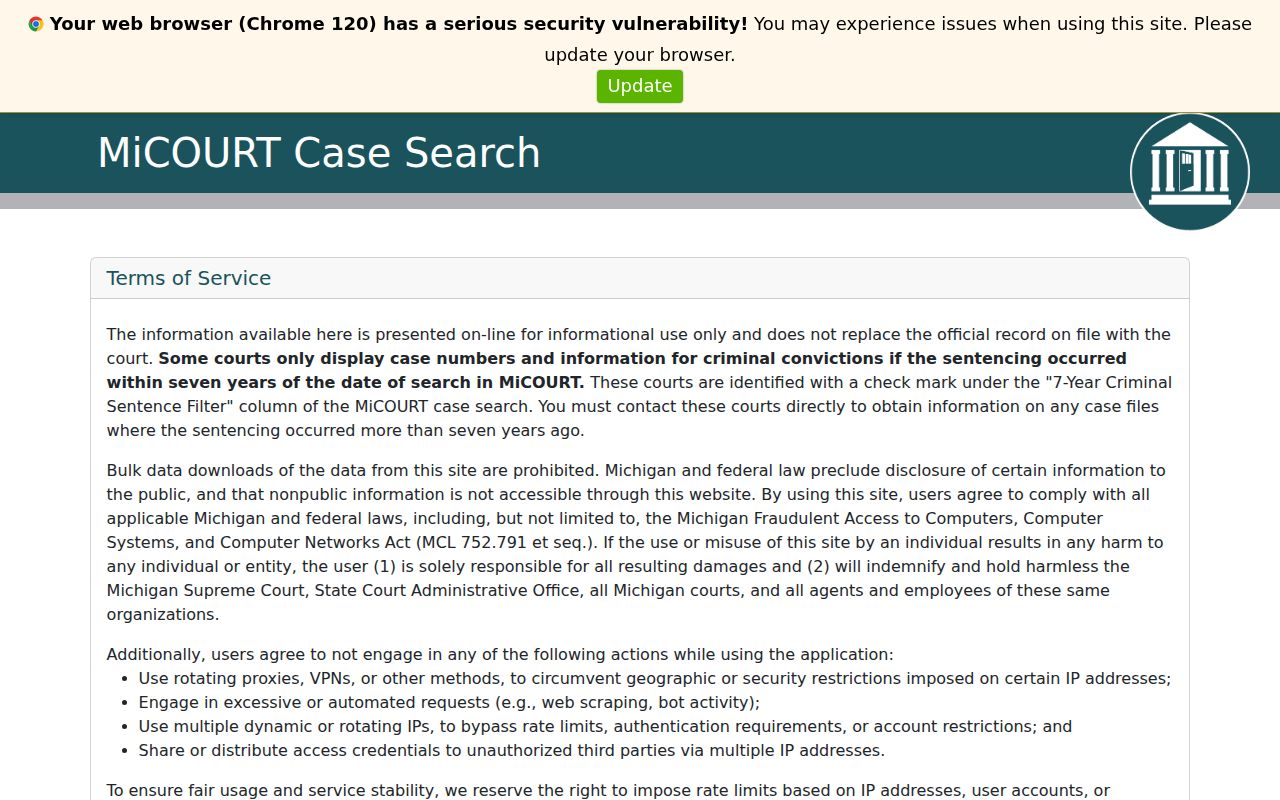
MiCOURT’s participation and display limits mean a missing result cannot establish that no record exists.
Farmington Hills Vital Record Rules
Vital records have different gates by record type. The Farmington Hills City Clerk distributes certified birth and death copies for city-held events, while Oakland County and MDHHS provide county and statewide channels. Under MCL 333.2882, a birth certificate less than 100 years old is restricted to the subject, a named parent, an heir, legal representative, guardian, court, or eligible attorney or power of attorney. Birth records 100 years old or more are public. Death, marriage, and divorce certificates are broadly requestable subject to stated exceptions.
MCL 333.2885 permits older materials to be sent to the Library of Michigan for genealogy, with 75 years for death, marriage, and divorce records and 110 years for births. Oakland genealogy access adds an online marriage search from about 1868 and death search from 1900, with older in-person research. The state ordering page offers online, phone, mail, drop-box, appointment, and will-call channels, each suited to a specific record and eligibility situation.
Michigan MDHHS vital-record ordering is shown in the official ordering capture.
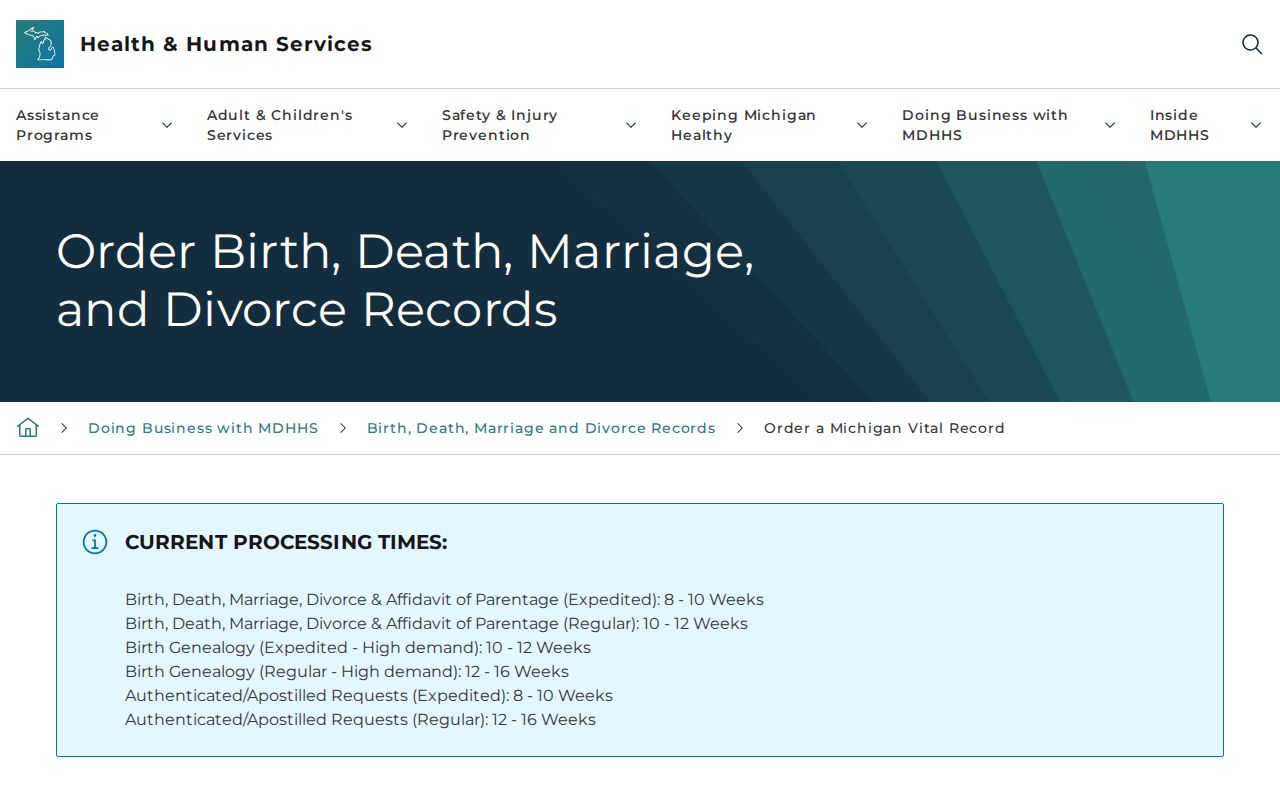
Check the exact record type and eligibility before ordering, because a genealogy lead and a certified current copy follow different rules.
Farmington Hills Heritage Collection Trail
The Farmington Community Library Heritage Collection is the local historical fallback when a current Farmington Hills residents directory search runs cold. It is housed at the library’s Farmington Hills location and holds Farmington-area city, telephone, and Polk directories; local newspapers; obituary, surname, and funeral-home indexes; yearbooks; photographs; and Farmington Township vertical files. Named online directory runs include George Cotter volumes from 1939 to 1946 and Michigan Bell telephone directories from January 1945 through January 1947. Scattered Farmington and Farmington Hills directory holdings run from 1939 to 2001.
The collection also gives an offline route. Farmington Observer material is on microfilm from 1910 to 2011, with scattered earlier issues, and the library offers local-history databases under its stated access rules. An obituary or surname index is a finding aid, not final proof. Inspect the newspaper page or original scan because volunteer indexing and old printing can contain errors.
Farmington Community Library Heritage Collection is the local shelf captured below.
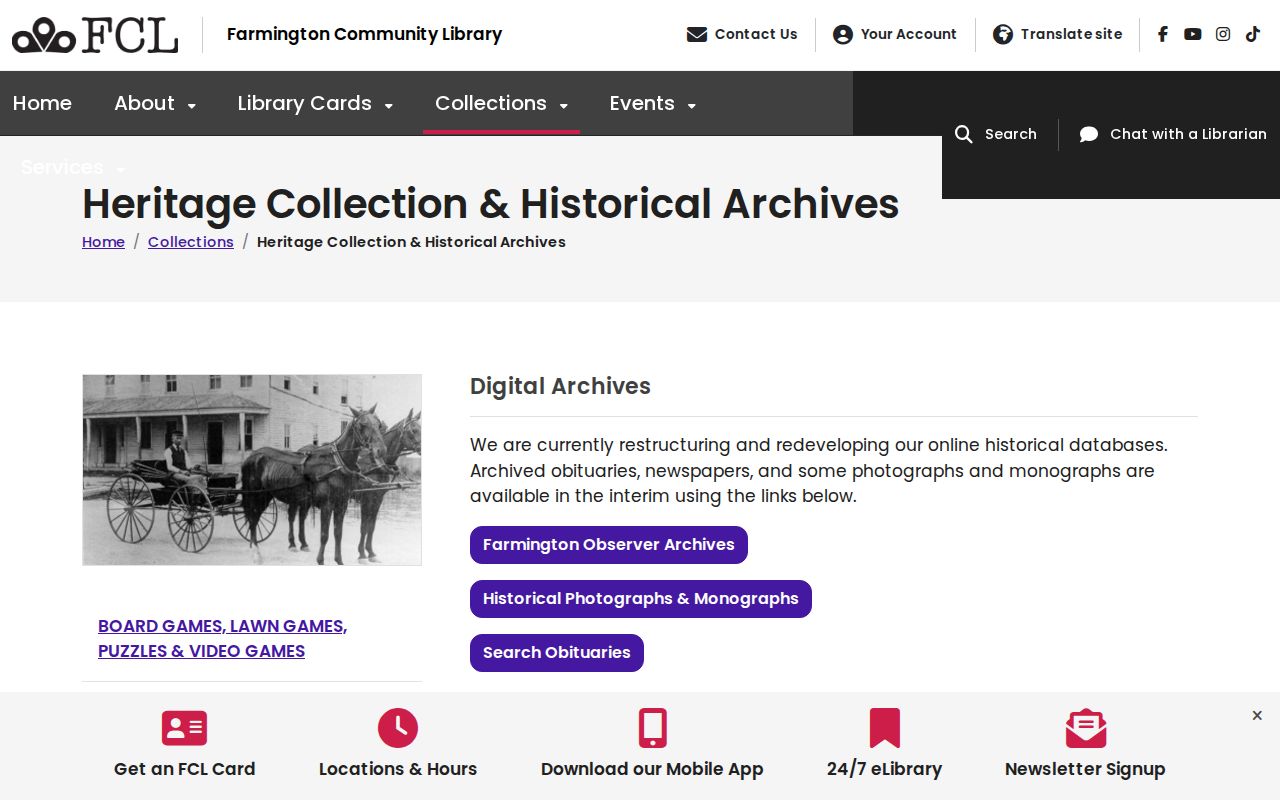
Its directory and newspaper holdings offer a dated household trail where modern parcel records do not show a former resident.
Farmington Hills Township Record Story
Farmington Hills record keeping has a real historical break. The 2024 city master plan recounts that a major fire in the 1870s destroyed many early Farmington Township Hall records. Later sources therefore matter more when an early township record is missing: deeds, tax material, church records, newspapers, directories, and census schedules can each supply a date or connection. Oakland County was organized in 1819, but Farmington Hills did not take its present municipal form until 1973.
That date is not just local color. Wood Creek Farms became a village in 1957, Quakertown in 1959, and the remaining township and villages became Farmington Hills in 1973. An older property, obituary, directory, or census trail may use Farmington Township, Farmington City, or another postal label. Compare the historical place name to the parcel PIN, legal description, street context, and date before calling it the same location.
Farmington Hills Request Channels
When an existing city record is not in a public portal, Farmington Hills has a documented FOIA route. The City Clerk accepts the city form in person or by mail at 31555 W. Eleven Mile Road, by fax, or by email. A narrow request should identify a name, exact property address or parcel ID, date range, and record type. Police and fire records have separate coordinators. The city normally responds within five business days after legal receipt and can provide a written ten-business-day extension under the Michigan Freedom of Information Act.
The county has its own counters, mail channels, and record units. Register of Deeds staff can handle older land-index work, and the county Vital Records and Probate offices provide channels beyond a web screen. A request can seek an existing document or index. It cannot require a public office to create a new citywide resident list. Clear detail also reduces the chance that a request is routed to the wrong custodian or returns a costly, overbroad result.
Farmington Hills City Clerk provides the local records contact shown here.
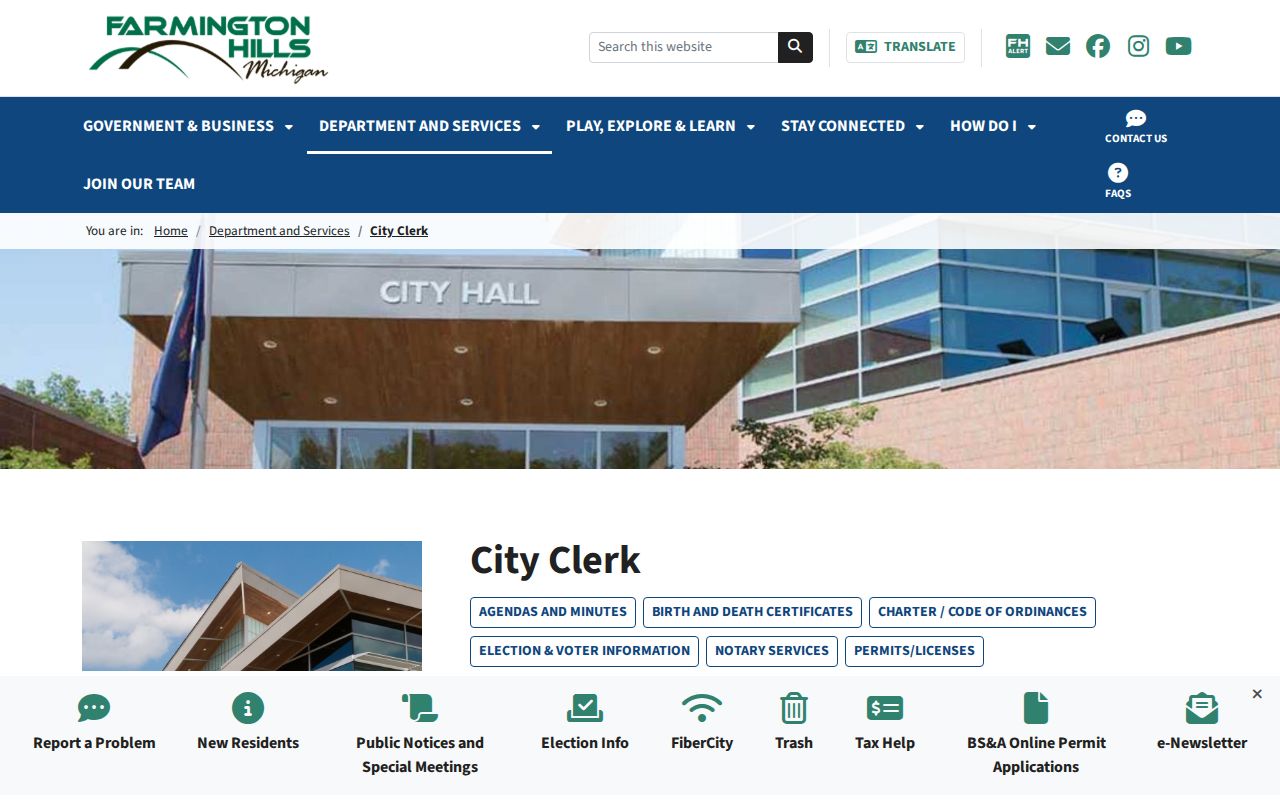
Use the clerk’s contact information to direct a specific city record request, not as a substitute for the county land or court custodian.
Farmington Hills Historical Directory Shelf
Historical Farmington Hills directory research is strongest when it follows a household across a few nearby editions rather than treating one listing as complete. Local digital scans include Farmington City or Township directories, Michigan Bell telephone books, White and Yellow Pages, and 1949 to 1950 Longacre and Mayfair material. The Library of Michigan explains that Polk directories can combine surname, street, phone, and classified sections. Bresser, also called criss-cross or cross directories, arrange people and addresses in street order when a relevant local run is available.
A criss-cross directory is an address-first volume that can show a head of household, phone number, owner or renter notation, first-listed year, or move note. It is a time-stamped directory assertion, not a deed or current residence claim. The full directory collection and how to read its entries belong on the Farmington Hills city directory page; the key here is to retain the edition date and the historical jurisdiction printed in the source.
Farmington Hills Record Privacy Limits
Official sources have meaningful boundaries. Parcel records are not a roster of renters or every household member. Utility and delivery-customer information is not public, and DMV address data is restricted. Michigan voter records have specific field exemptions. The Michigan Address Confidentiality Program provides a substitute address and mail forwarding for qualifying people at risk, and its protected information is not subject to ordinary FOIA disclosure. A mailing address may therefore be intentionally different from a physical location.
Personal use only. Use Farmington Hills record leads for family history, estate questions, civic research, or a legitimate property question. Never use a record to watch, contact, threaten, or harass another person.
A category of commercial listing services can offer stale or mismatched leads. Compare any such lead against a named public custodian, original document, or library scan. If a record appears wrong, ask the office that maintains it about its correction or redaction process instead of trying to reconstruct a protected address from other indexes.