
Finding Farmington Hills Resident Leads
Let the question pick the record. That is the first rule of Farmington Hills resident lookup. An exact address belongs with the municipal assessor and the county parcel map. A name tied to a purchase belongs in the Register of Deeds index. Someone from an earlier era may surface elsewhere first. A Farmington telephone book, obituary index, yearbook, or census may catch them. Court and vital material can confirm a relationship. Each system carries its own access rule, so plan for that. Remember that a current owner is not every person at an address. A directory entry is a dated listing rather than a lasting identity claim.
Treat the record date as seriously as the spelling. Farmington Hills grew out of the former Farmington Township, Wood Creek Farms, and Quakertown areas. Older material can carry a different place label. Keep the exact street form, parcel number, and source date in your notes. Those details let you test a later match instead of merging two similar people. A needed city record may not be online. The City Clerk and Michigan Freedom of Information Act request channels are the documented fallback for a Farmington Hills street directory hunt.
- Search the Farmington Hills assessment record by address, name, or parcel number and save the parcel identity.
- Check Oakland County Property Gateway to compare the mapped parcel, address, and county PIN.
- Use the Oakland Super Index for a deed or other recorded document connected to the name, address, or PIN.
- For a past household, consult Farmington Community Library directory, newspaper, obituary, or yearbook holdings.
- Ask the identified custodian for an existing record when the online index does not provide the needed detail.
Note: A solid Farmington Hills residents directory result names a record and a date, never a promise that every household member is publicly listed.
Farmington Hills Records Offices
Three offices form the practical front desk for a Farmington Hills residents directory search. The municipal assessment system links an address and an owner name in one place. It adds a parcel reference there too. Oakland County records land documents and maintains the Super Index. The City Clerk keeps the city voter-registration file. The clerk also issues city-held birth and death copies. City FOIA requests go to that office as well. County and city records answer different questions. A sound search moves from an address or name to the custodian that created the record. That office holds the authoritative copy of whatever a city directory lookup turns up.
Oakland County Clerk/Register of Deeds
1200 N. Telegraph, Dept. 480
Pontiac, MI
248-858-0597
Farmington Hills Assessing Records
Farmington Hills municipal portal
Farmington Hills, MI
248-871-2470
Farmington Hills City Clerk
31555 W. Eleven Mile Road
Farmington Hills, MI 48336
248-871-2414
Farmington Hills Parcel Search Keys
The Farmington Hills BS&A Online portal splits its services into separate areas. Those cover assessing, building, tax, utility billing, and detailed records. Public search options include Address, Name, Parcel Number, Utility Billing Account Number, and Building Department Record Number. Start with an address search when the parcel is the goal. A name search can serve as a property or tax lead. But the role of the source still matters. Note that the address used for tax correspondence can differ from the physical situs. That is where the parcel actually sits. Keeping that distinction straight saves a lot of confusion in a ZIP code directory style trace.
| Portal field | Use in a resident search | Important limit |
|---|---|---|
| Address | Find a municipal parcel record | Check the exact street form |
| Name | Locate a property, tax, or building lead | It does not establish household membership |
| Parcel Number | Match a city record to the county PIN | Keep the source formatting |
| Building Record Number | Reach a permit or building record | Applicant is not necessarily an occupant |
The Oakland County Property Gateway adds the map connection to this city directory trail. Its search field takes a PIN or a property address of at least five characters. Partial addresses, percent wildcards, and comma-separated PINs all work. That flexibility makes it handy for testing a stubborn address. It then confirms the selected parcel on the map itself.
The official Farmington Hills BS&A Online page displays the municipal search screen. That screen supports this route.
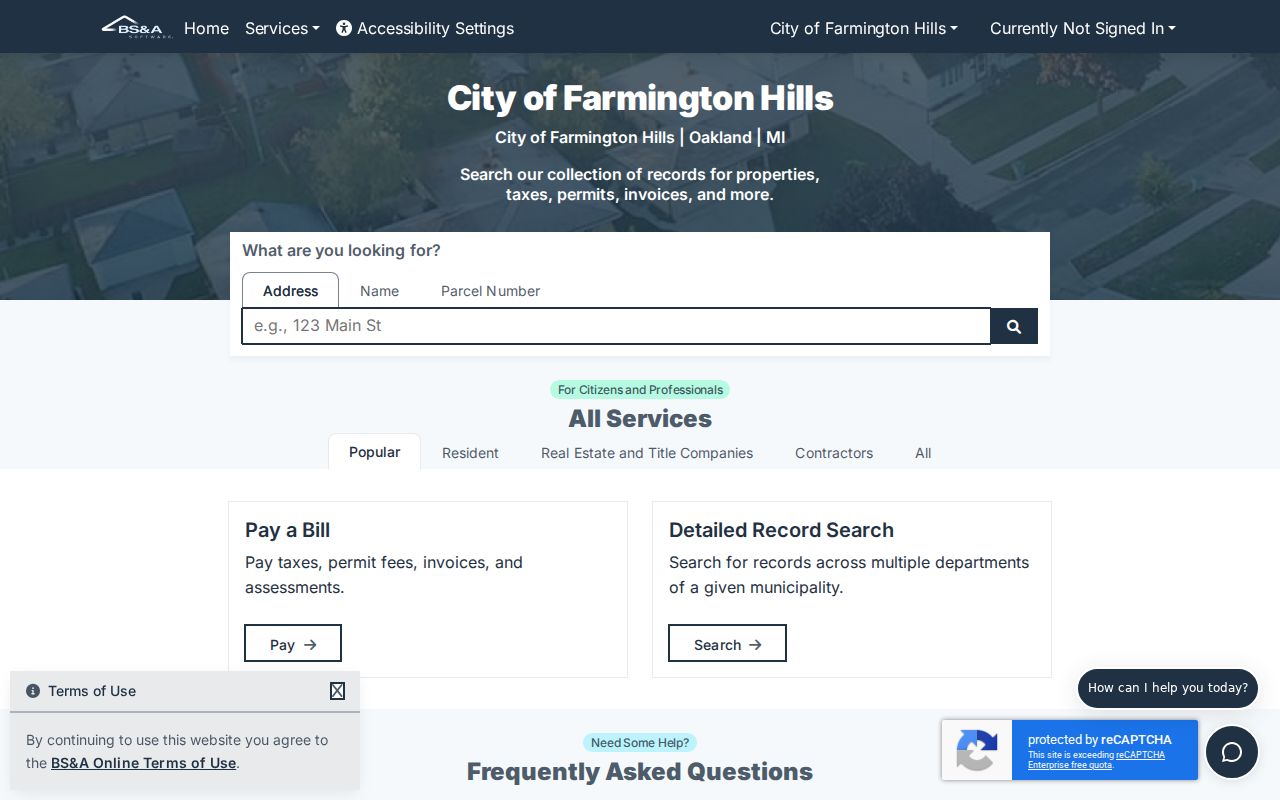
Treat the portal as a starting point for an address-led Farmington Hills residents directory search, not a complete public household roll.
Farmington Hills Map and PIN Trail
Property Gateway offers parcel boundaries, current and historic aerials, elevation contours, and FEMA flood layers. Printable map or report products come too. Use the map to tell a corner parcel from a condominium unit, a common area, or a neighboring lot. Never treat a nearby record as the same property without that check. A county PIN bridges the municipal search, the county map, tax material, and the deed trail. It is also called a Sidwell or parcel identifier. The county tax search wants the ten-digit PIN with no dashes or spaces. That single number ties the whole property rolls chain together.
- Parcel
- A defined piece of land used for tax and mapping records.
- Situs address
- The physical address of the parcel or building.
- Mailing address
- The place tax correspondence is sent, which may be elsewhere.
- PIN
- The county parcel identifier used to keep a land record tied to the correct property.
Basic map browsing and paid reports are different access levels. A map impression orients a search, but an exact field calls for a dated document or report. The Property Gateway image below shows the county tool behind this Farmington Hills residents directory route, and the Oakland County Property Gateway supplies the mapped parcel view.
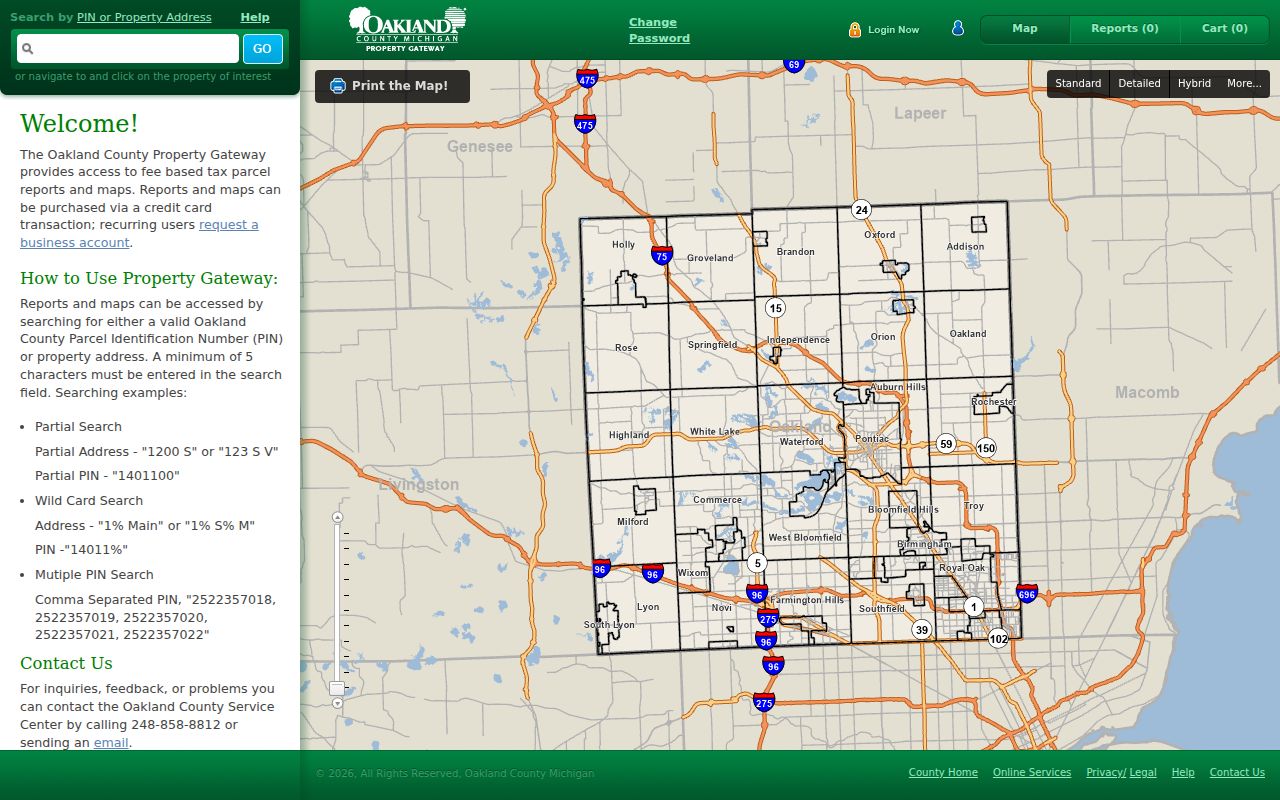
Follow every map result with the exact PIN and source date, especially when an older record still carries a Farmington Township label.
Farmington Hills Deed Index History
Land-record research in this county starts with the Oakland County Super Index, the discovery layer for recorded documents. Its computerized property records begin on January 1, 1964. Anything older sits in manual deed books, the Grantor/Grantee Unit, and the Tract Index. A Farmington Hills deed search there can start small. Type a name, a full address, or a parcel PIN. Advanced fields open more doors: Grantor, Grantee, recorded or file date, instrument number, document type, subdivision, block, and lot.
The party labels carry meaning. A grantor gives up an interest in the land. A grantee receives one. Neither role proves anyone actually lived at the property, so record the document number, recording date, party role, and legal description, and compare against the recorded image whenever a conclusion depends on it. Indexing can lag behind recording. Copies are purchased one at a time or through a subscription.
The image from the Oakland County Super Index shows the recorded-document search route a researcher will meet.
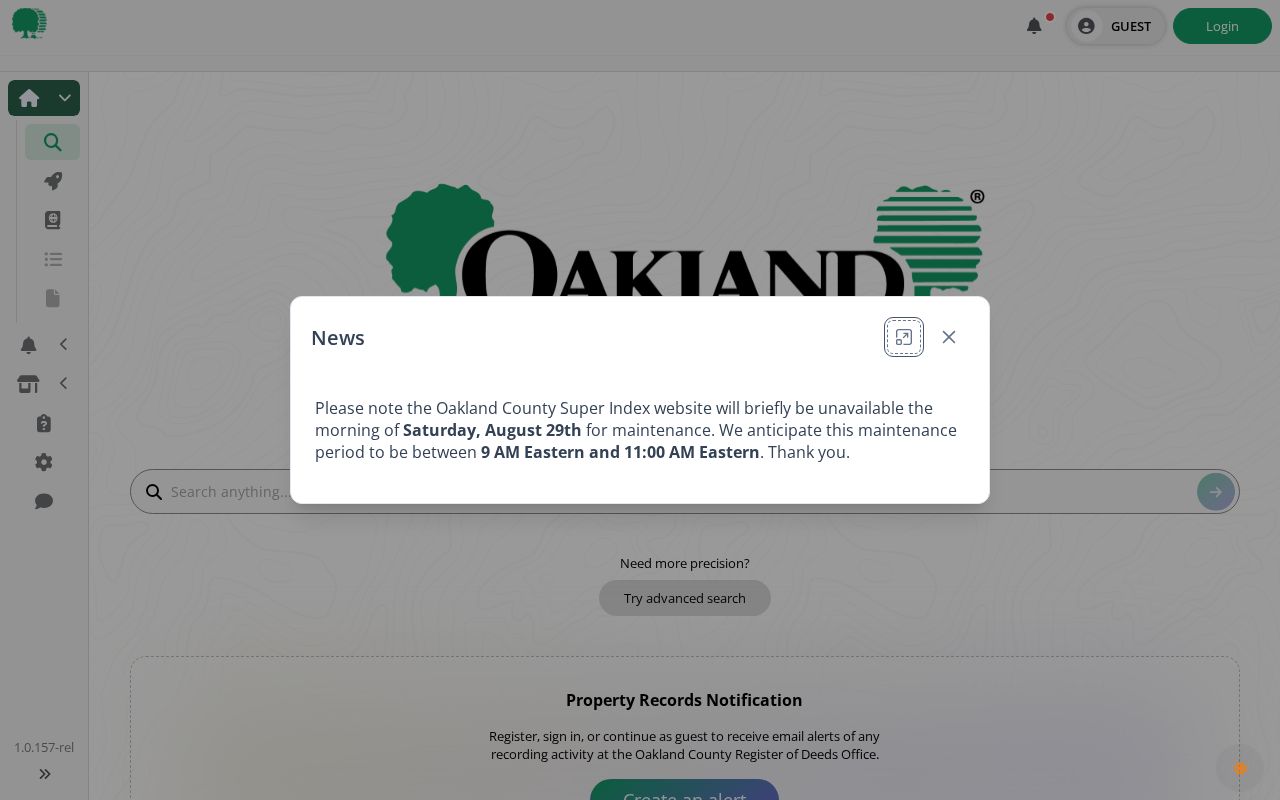
Keep the 1964 line handy in any Farmington Hills residents directory notebook. Transfers recorded before that date need the manual deed-book channel instead.
Farmington Hills Current Record Sources
Current Farmington Hills resident evidence splits by purpose. Parcel and tax records name the owner of record. Recorded land documents list the parties to a transaction. The voter file follows its own request path, and a voter's personal lookup is not a public citywide browser. Court portals surface eligible case parties, not a municipal address roll. The table keeps these trails distinct so a resident lookup does not overstate what any single record proves.
| Source | People or facts shown | Keeper | Access route |
|---|---|---|---|
| Assessing and parcel record | Owner of record, situs, parcel, tax context | Farmington Hills and Oakland County | BS&A and Property Gateway |
| Recorded document index | Grantors, grantees, document details | Oakland Register of Deeds | Super Index, counter, or mail |
| Qualified Voter File | Authorized public registration fields | Michigan Department of State | FOIA request by listed geography |
| Eligible court index | Party, case number, and register information | 47th District and Oakland courts | Portal plus clerk file |
| City staff information | Public city staff contacts | Farmington Hills City Clerk | Department page |
To test one person across several record types, follow the focused Farmington Hills resident lookup workflow. An owner, a filing party, and a dated directory entry are not the same kind of fact. The workflow keeps them separate.
Farmington Hills Voter File Access
The Michigan Voter Information Center lets a voter check personal details. These include registration status, polling place, clerk, sample ballot, and absentee information. It is not a public browse of every Farmington Hills name. A public registration-file request goes through the state Qualified Voter File form. The requester selects an available geography, such as a jurisdiction, precinct, county, or district. The form does not support a custom household or ZIP search. The Farmington Hills City Clerk maintains the city registration file. The office also handles local corrections and precinct questions.
The requestable file can hold a full name and a residential or mailing address when available. It also holds year of birth, registration date, status, voter ID, jurisdiction codes, and requested-ballot history. MCL 168.509gg shields driver or state ID numbers and month and day of birth. It also protects phone, email, signature, the last four Social Security digits, and other listed fields. A registration record carries a date and a status. It is not a universal count of who lives at an address.
The Michigan Voter Information Center is the official personalized lookup shown for reference.
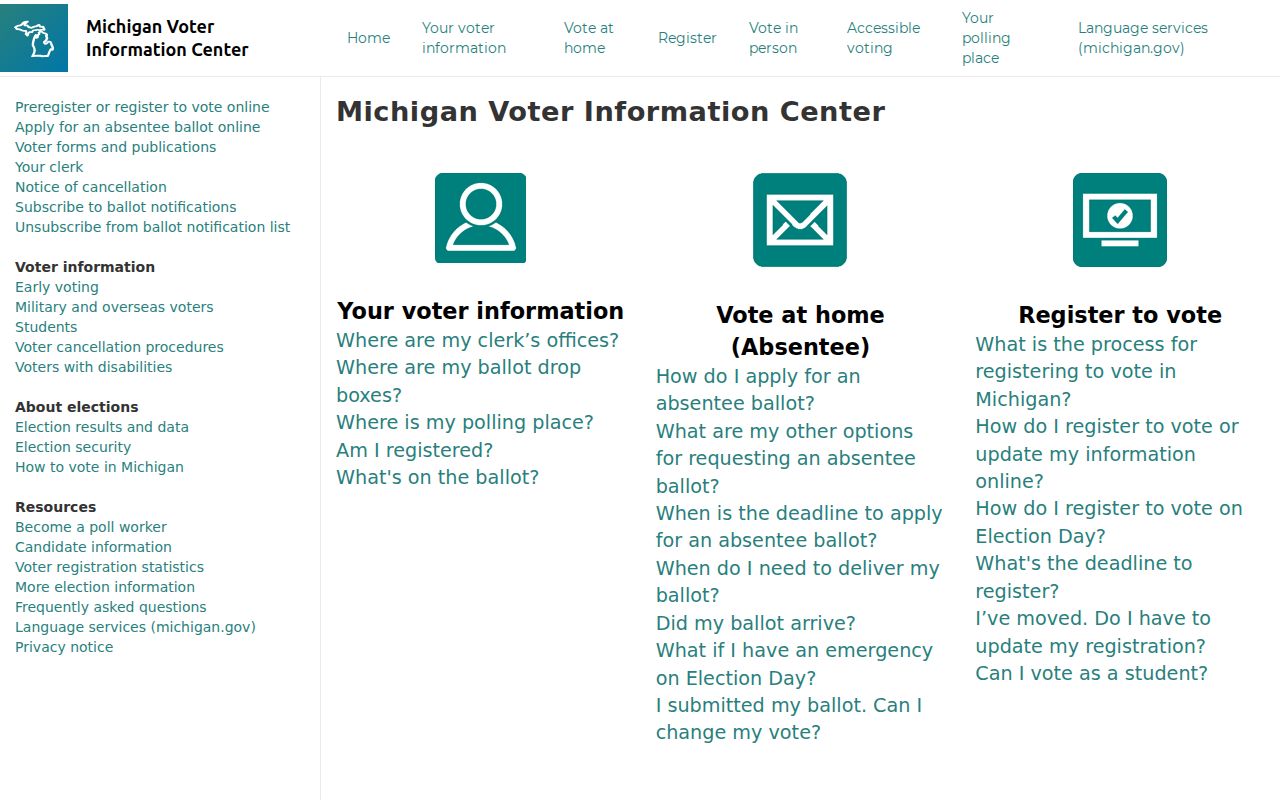
That individual-oriented screen shows why two Farmington Hills residents directory paths exist. A lawful file request and a self-service voter check are separate doors.
Farmington Hills Court Name Records
The 47th District Court serves Farmington and Farmington Hills. It handles traffic, civil, small claims, and preliminary felony matters. Statewide MiCOURT searches participating cases by participant or case number. Oakland Court Explorer covers Circuit and Probate case information. Search controls include court type, business or person name, case number, party type, case-year, and case-type. A name hit always calls for a role check. The party could be a creditor, attorney, witness, fiduciary, or business representative. Any of those roles would fall short of being a Farmington Hills resident.
Several record groups are excluded or restricted outright. Juvenile, PPO, probate mental-health, sealed, and protected material is off limits by design. That is not a gap to work around. For a result that matters, the official file, the clerk, or the court counter remains the confirmation channel. Court Explorer displays registers of action and eligible document-ordering paths. Probate document ordering needs a case number, even after a name search finds it.
Oakland Court Explorer appears here as the Farmington Hills court-search interface.
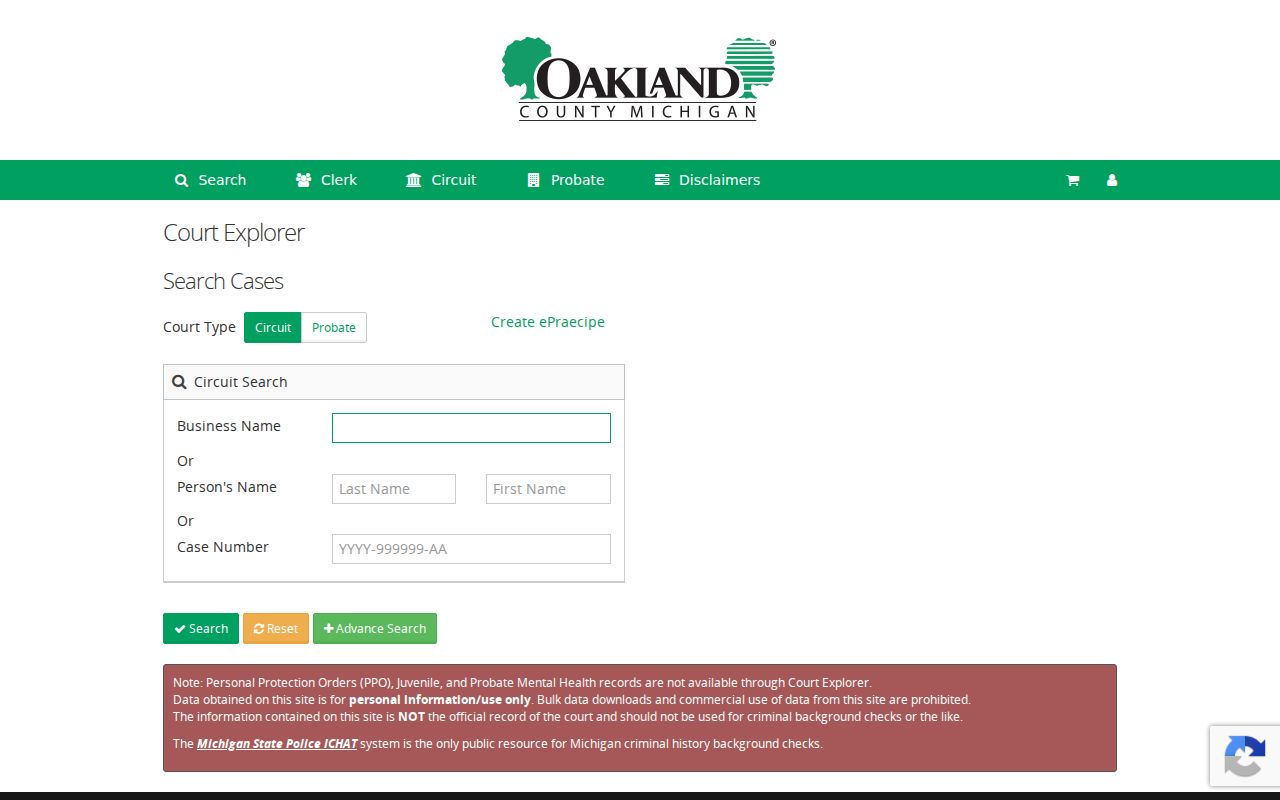
A court index yields a lead. The court clerk is the source for an official file or copy request. For the separate statewide interface, Michigan MiCOURT Case Search provides it.
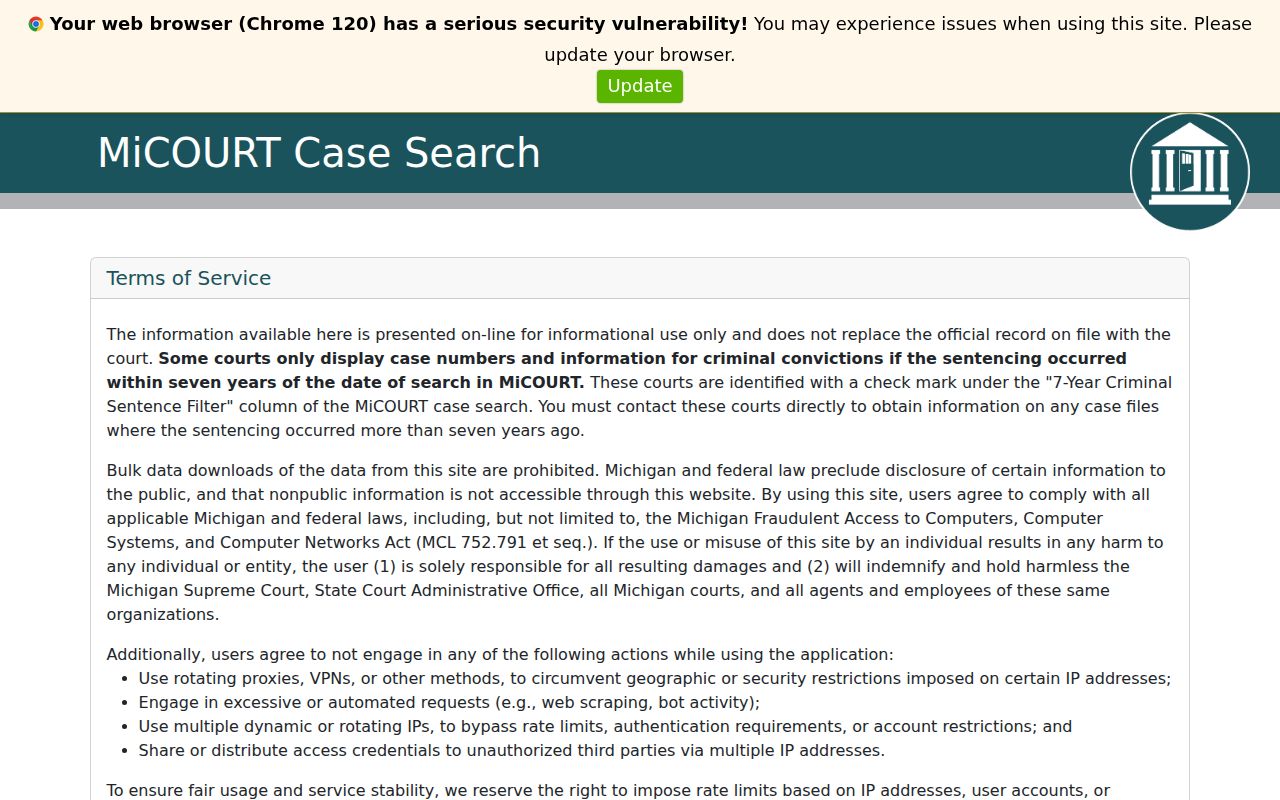
MiCOURT's participation and display limits mean one thing. A missing result never proves no record exists.
Farmington Hills Vital Record Rules
Vital records have gates. In Farmington Hills the rules differ by record type. The City Clerk issues certified birth and death copies for city-held events, while Oakland County and MDHHS provide county and statewide channels. MCL 333.2882 restricts a birth certificate less than 100 years old to the subject, a named parent, an heir, a legal representative, a guardian, a court, or an eligible attorney or power of attorney. Birth records 100 years old or more are public. Death, marriage, and divorce certificates are broadly requestable. Stated exceptions apply.
MCL 333.2885 permits older materials to move to the Library of Michigan for genealogy, with 75-year thresholds for death, marriage, and divorce records and 110 years for births. Oakland genealogy access adds an online marriage search from about 1868 and a death search from 1900. Older items take in-person research. The state ordering page, Michigan MDHHS vital-record ordering, supports online, phone, mail, drop-box, appointment, and will-call channels. Each channel fits a specific record and eligibility situation.
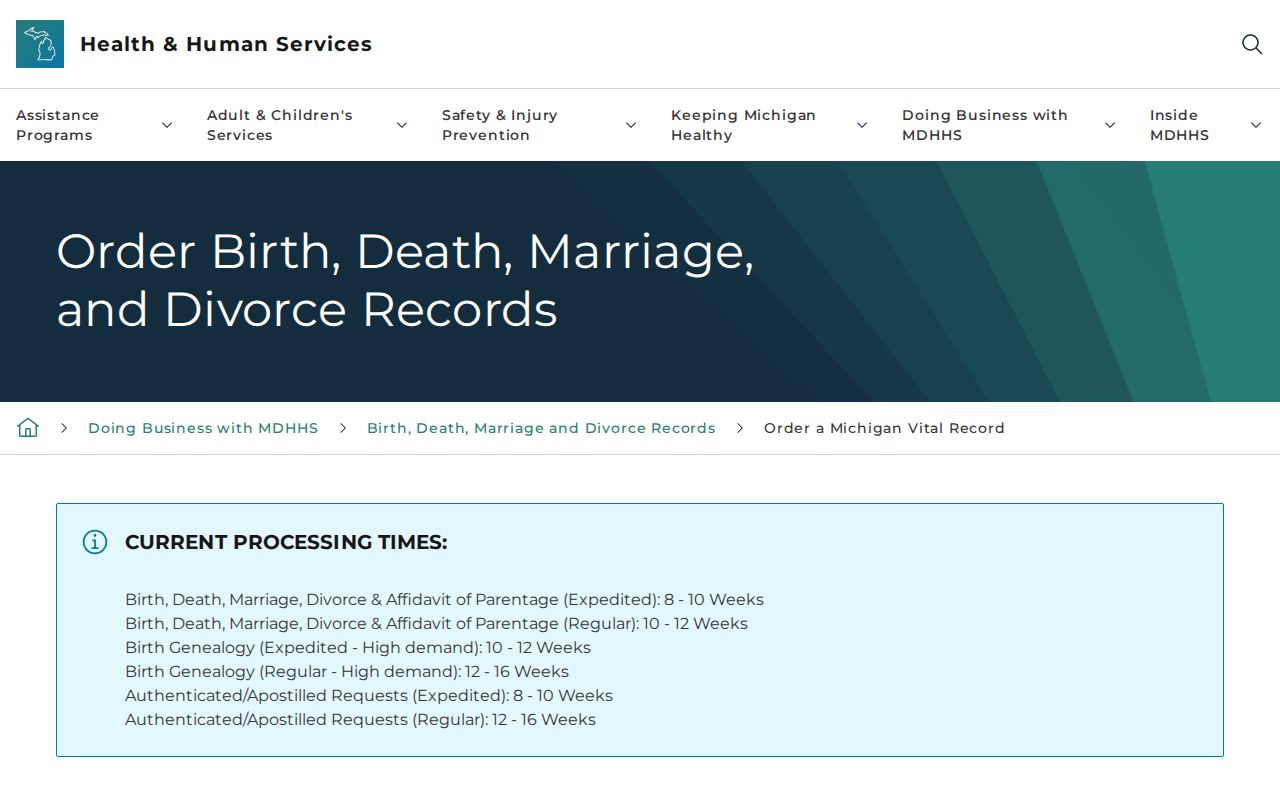
Know the record type and your eligibility before ordering. A genealogy lead and a certified current copy follow different rules.
Farmington Hills Heritage Collection Trail
A current Farmington Hills residents directory search can run cold. The Farmington Community Library Heritage Collection is the local fallback. It sits at the library's Farmington Hills location. The shelves hold Farmington-area city, telephone, and Polk directories. Local newspapers, obituary, surname, and funeral-home indexes are there too. Yearbooks, photographs, and Farmington Township vertical files round out the holdings. Named online directory runs include George Cotter volumes from 1939 to 1946. They also include Michigan Bell telephone directories from January 1945 through January 1947. Scattered Farmington and Farmington Hills directory holdings run from 1939 to 2001.
There is an offline route too. Farmington Observer material sits on microfilm from 1910 to 2011, with scattered earlier issues. The library offers local-history databases under stated access rules. Treat an obituary or surname index as a finding aid, not final proof. Inspect the newspaper page or original scan. Volunteer indexing and old printing can introduce errors. The Farmington Community Library Heritage Collection is a direct local shelf. It serves anyone tracing past residents of Farmington Hills.
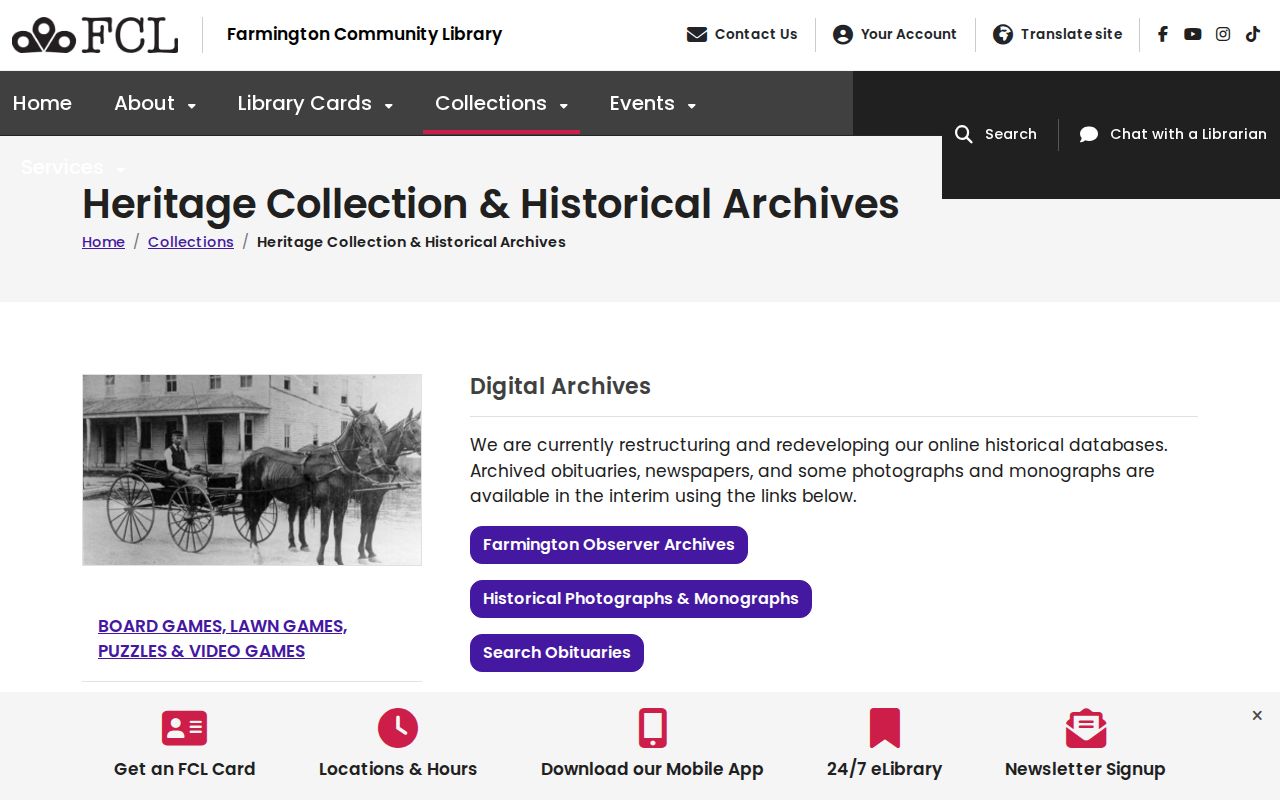
Old directories give a dated household trail. Modern parcel records do not always show a former Farmington Hills resident.
Farmington Hills Township Record Story
Farmington Hills record keeping has a real historical break. A major fire in the 1870s destroyed many early Farmington Township Hall records, according to the 2024 city master plan. So later sources matter greatly. When an early township record is missing, deeds, tax material, church records, newspapers, directories, and census schedules can each supply a date or connection. Oakland County was organized in 1819. Farmington Hills did not take its present municipal form until 1973.
That date is not just local color. Wood Creek Farms became a village in 1957 and Quakertown followed in 1959. The remaining township and villages formed Farmington Hills in 1973. An older property, obituary, directory, or census trail may carry a Farmington Township, Farmington City, or other postal label. Do not assume it is the same place. Compare the historical place name to the parcel PIN, legal description, street context, and date before drawing that conclusion.
Farmington Hills Request Channels
Farmington Hills has a documented FOIA route. Use it when a city record sits outside any public portal. The City Clerk accepts the city form in person or by mail at 31555 W. Eleven Mile Road, by fax, or by email. A narrow request works best. Give a name, exact property address or parcel ID, date range, and record type. Police and fire records have separate coordinators. The city normally responds within five business days after legal receipt and can grant a written ten-business-day extension under the Michigan Freedom of Information Act.
The county runs its own counters and mail channels. Register of Deeds staff can handle older land-index work. Its Vital Records and Probate offices go beyond a web screen. A request may seek an existing document or index, but it cannot force a public office to create a new citywide resident list. Clear detail reduces the risk of routing to the wrong custodian or getting a costly, overbroad result.
The Farmington Hills City Clerk is the local records contact. Direct a specific city record request there.
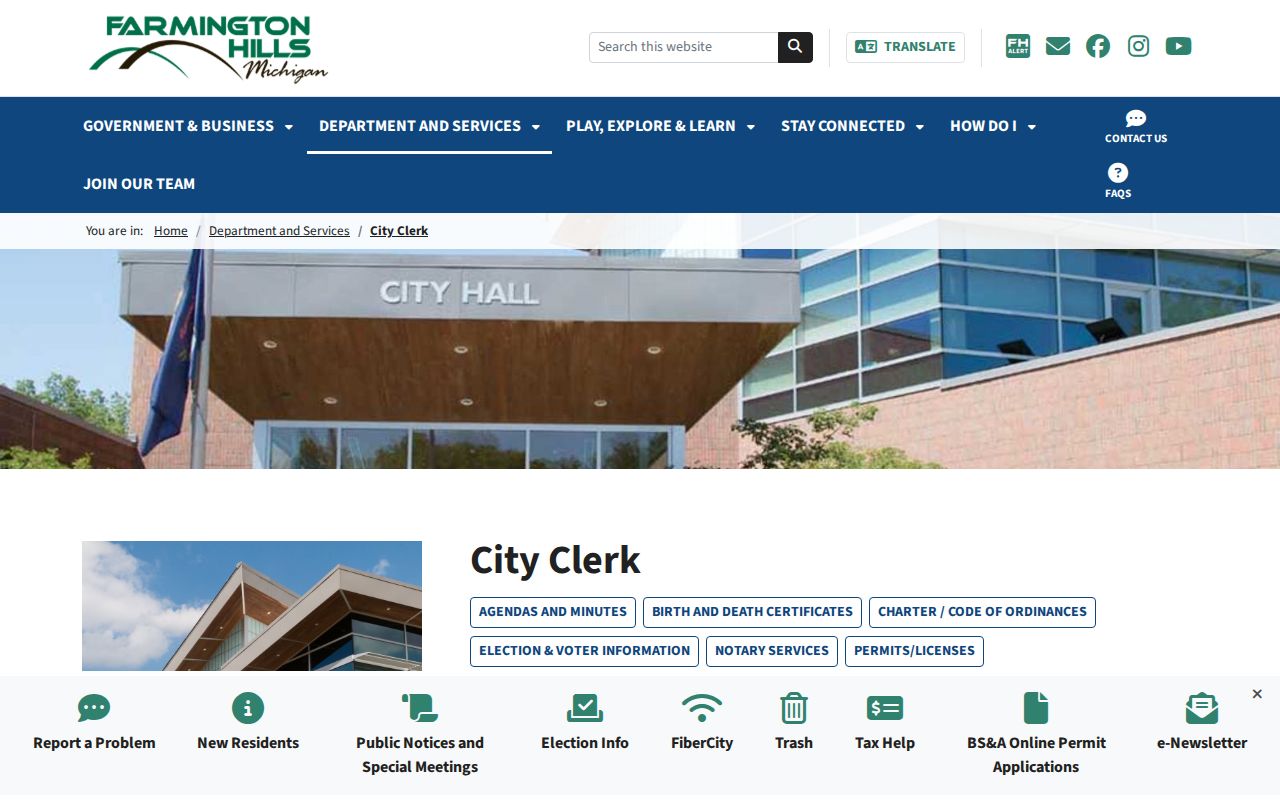
Use the clerk's contact details for a specific city record request. They are not a substitute for the county land or court custodian.
Farmington Hills Historical Directory Shelf
Old Farmington Hills directory research works best when you trace a household across several nearby editions. One listing is a snapshot. Several editions show a family arriving, moving, and settling. Digitized local material includes Farmington City and Township directories, Michigan Bell telephone books, White and Yellow Pages volumes, and Longacre and Mayfair items from 1949 to 1950. The Library of Michigan notes that Polk directories often mix surname, street, phone, and classified sections in one book. Bresser volumes go by other names too. Call them criss-cross or cross directories. They sort people and addresses in street order whenever a relevant local run exists.
A criss-cross volume is address-first. It may list a head of household, a phone number, an owner or renter notation, the first-listed year, or a move note. Treat each entry as a time-stamped directory assertion. It is not a deed. It is not a claim of current residence. The full directory collection and how to read its entries belong on the Farmington Hills city directory page; the key here is to keep the edition date and the historical jurisdiction printed in the source.
Farmington Hills Record Privacy Limits
Official records have real limits. Parcel rolls are not a household roster. Utility and delivery-customer information stays private, DMV address data is restricted, and Michigan voter records carry specific field exemptions. The Michigan Address Confidentiality Program gives qualifying people at risk a substitute address with mail forwarding. Its protected details sit outside ordinary FOIA disclosure. A mailing address may differ from a physical location on purpose.
Personal use only. Use Farmington Hills record leads for family history, estate questions, civic research, or a legitimate property question. Never use a record to watch, contact, threaten, or harass another person.
Commercial listing services peddle stale leads. Mismatches slip through as well. Check any lead against a named public custodian, an original document, or a library scan. If a record looks wrong, ask the office that maintains it about its correction or redaction process instead of reconstructing a protected address from other indexes.